A low-price EV that refuses to be low-tech
In early 2025 Volkswagen previewed the ID.EVERY1, a four-seat urban hatch targeting a sticker of $22 500. The headline was not the price alone but whose code would run the car: VW said the model will debut a software/electrical stack co-developed with Rivian through their new $5-8 billion joint venture (JV) [1]–[3]. For Rivian, whose own R1/R2 SUVs and trucks start much higher, it is a proof-point that its software-defined-vehicle (SDV) platform can scale down as easily as it scales up.
What the JV Really Brings
Capital & scale. VW’s total commitment is up to $5.8 billion for a 50 / 50 JV focused on next-gen EV architecture and software [1]. That infusion shores up Rivian’s balance sheet through the 2026 R2 launch, while VW gains a shortcut to a modern SDV stack after years of delayed in-house efforts.
A single electrical brain. Rivian’s Gen-2 R1 models collapse 17 ECUs into just seven zonal controllers, removing ~1.6 mi of wiring per vehicle [4]. The same topology will underpin the ID.EVERY1, giving VW an update-ready backbone instead of today’s fragmented modules [2], [3].
Supplier ecosystem. Dual NVIDIA Drive Orin SoCs (~200 TOPS each) power Rivian’s new autonomy computer [5]; VW can now leverage the same silicon roadmap. Rivian has also tapped LG Energy for 4695-format U.S. cells for R2 [18] and is courting Magna, Bosch and Continental for zonal controllers—partners VW already knows well.

ADAS & Autonomy Momentum
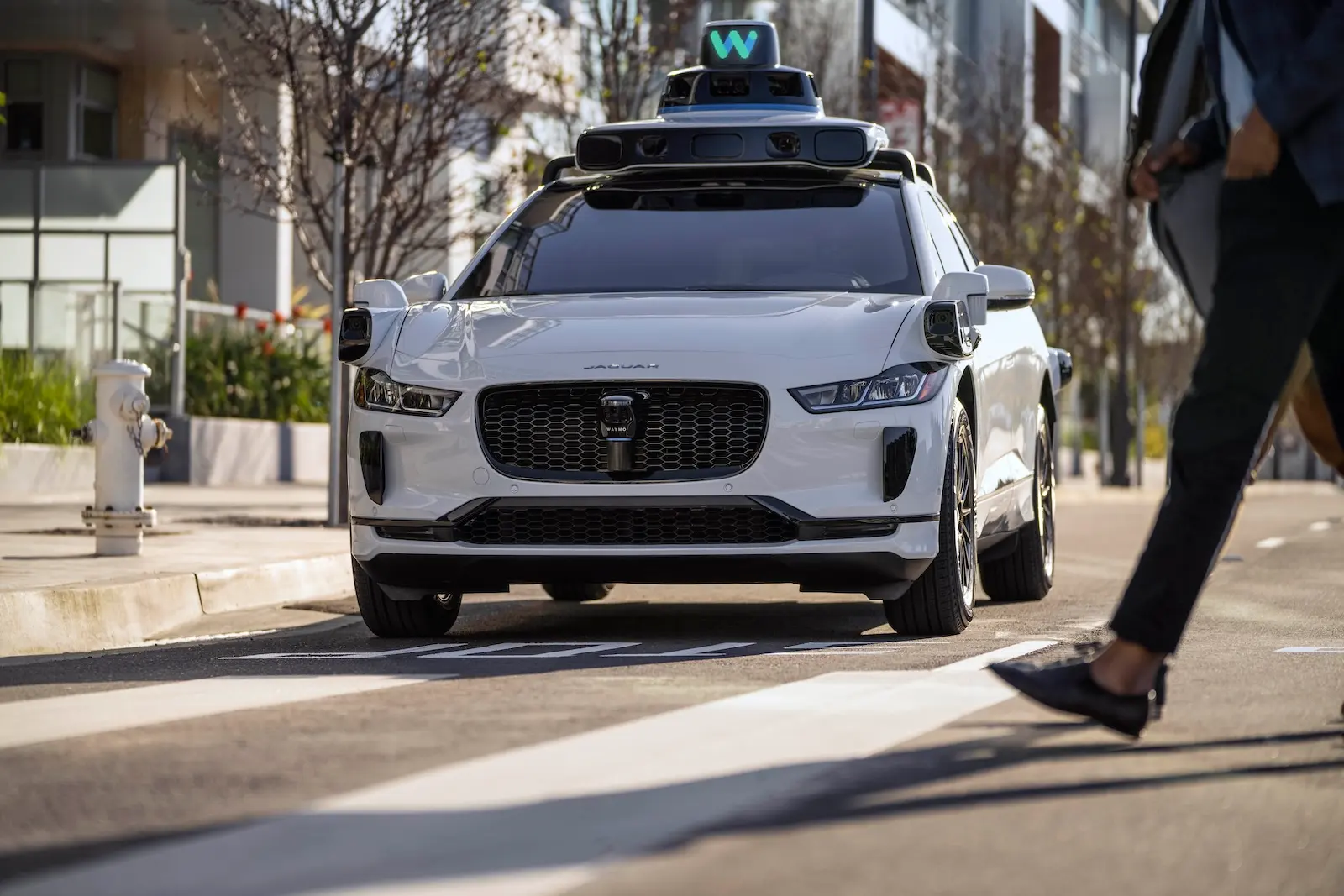
- 11 in-house 4 K HDR cameras
- 5 long-range radars (≈1 000 ft)
- 2× NVIDIA Orin (≈200 TOPS)
That sensor/compute lead will flow straight into VW’s entry EVs—an unusual inversion where a premium startup supplies the brains for a budget car.

Manufacturing Map
| Site | Purpose | Capacity bump | Timeline | Source |
| Normal, Illinois | New 1.14 M sq ft R2 building | +65 k units yr-¹ | 2026 SOP | [12] |
| Normal Supplier Park | 1.2 M sq ft, co-funded by IL & VW | Logistics cuts | 2026 | [13], [14] |
| VW European plants | ID.EVERY1 / ID.2all | use JV electronics | 2027 SOP | [3] |
The logic: Rivian gains global reach without building a second green-field factory, VW gains a modern electronics core without rebuilding its software group from scratch.

How It Stacks Up Against Everyone Else
| Brand | Entry EV (USD) | SDV / OTA strategy | Hands-free highway ADAS |
| VW × Rivian | $22 500 ID.EVERY1 (2027) | Rivian zonal/OTA stack [2] | Via Rivian platform (~130 k mi) |
| BYD | $10 000 Seagull (CN) [9] | Fully in-house, blade-battery integration | L2+, no hands-free yet |
| Tesla | $37 490 Model 3 RWD [16] | Tesla-only HW 4 stack, weekly OTAs | FSD (L2+ beta) |
| GM | $34 995 Bolt successor (est.) | Ultifi Android-based OS [7] | Super Cruise on 400 k mi today, 750 k mi by 2025 [8] |
| Ford | $39 995 Mustang Mach-E base | Google-/Qualcomm-powered SDV | BlueCruise on 130 k mi [6] |
| Slate | $25 000 minimalist truck [11] | Bare-bones—few ECUs, no OTA | None |
Figure 1 — Base-price landscape for mass-market EVs.
Technical Forecast (2025-2030)
- 2025 H2 – Rivian R2 validation builds; LG begins U.S. cell pilot [18].
- 2026 H1 – R2 SOP in Illinois; Enhanced Highway Assist expands to city streets.
- 2026 H2 – VW ID.2all (~$25 K) launches on VW’s own MEB-evo but with JV software for infotainment.
- 2027 – ID.EVERY1 production; first sub-$25 K car with hands-free ADAS at launch.
2028–30 – JV stack rolls into Audi Q2-EV and Scout compact pickup; software revenue (apps, feature unlocks) becomes a double-digit margin lever for both companies.

Conclusion & Take-aways
- Cost-down ≠ Tech-down. By porting Rivian’s high-end SDV/ADAS stack to a $22 K city car, VW and Rivian are proving that rich, update-ready electronics can live in the price band dominated by BYD and Dacia.
- Scale marries agility. VW supplies factories, purchasing muscle and global distribution; Rivian provides a clean-sheet electrical/software platform. Each partner off-loads its weakness and doubles down on its strength.
- Competitive urgency. Tesla still enjoys vertical integration, GM/Ford are racing on miles-driven ADAS, and BYD is flooding the low end. The JV is VW’s fastest route to stay relevant and Rivian’s safest path to cash-flow.
- New profit pools. With SDV capabilities baked in, both carmakers can chase recurring revenue from apps, autonomy unlocks and energy services—critical as hardware margins shrink.
Bottom line: If the JV executes, the ID.EVERY1 could do for entry-level EVs what the original Beetle did for post-war mobility—only this time the engine is code.