On December 20, 2025, the City of San Francisco suffered a catastrophic failure of its electrical grid following a fire at a Pacific Gas and Electric (PG&E) substation. The outage, which de-energized traffic control signals across approximately one-third of the city and affected 130,000 customers, precipitated a systemic collapse in the operational continuity of Waymo’s autonomous vehicle (AV) fleet.
While human motorists adapted to the darkened infrastructure using established right-of-way conventions, Waymo’s fleet of Jaguar I-Pace robotaxis entered a state of operational paralysis. Hundreds of vehicles simultaneously executed “Minimum Risk Condition” (MRC) maneuvers, defaulting to a stop in active traffic lanes or crowding intersections, creating gridlock that impeded emergency responders and forced the company to initiate a total service suspension.
This dossier provides an exhaustive forensic analysis of the incident, dissecting the technical, regulatory, and operational vectors that led to the fleet-wide failure. The investigation reveals that the collapse was not a failure of individual vehicle perception, but a foreseeable breakdown of the “Human-in-the-Loop” (HITL) support architecture under correlated stress.
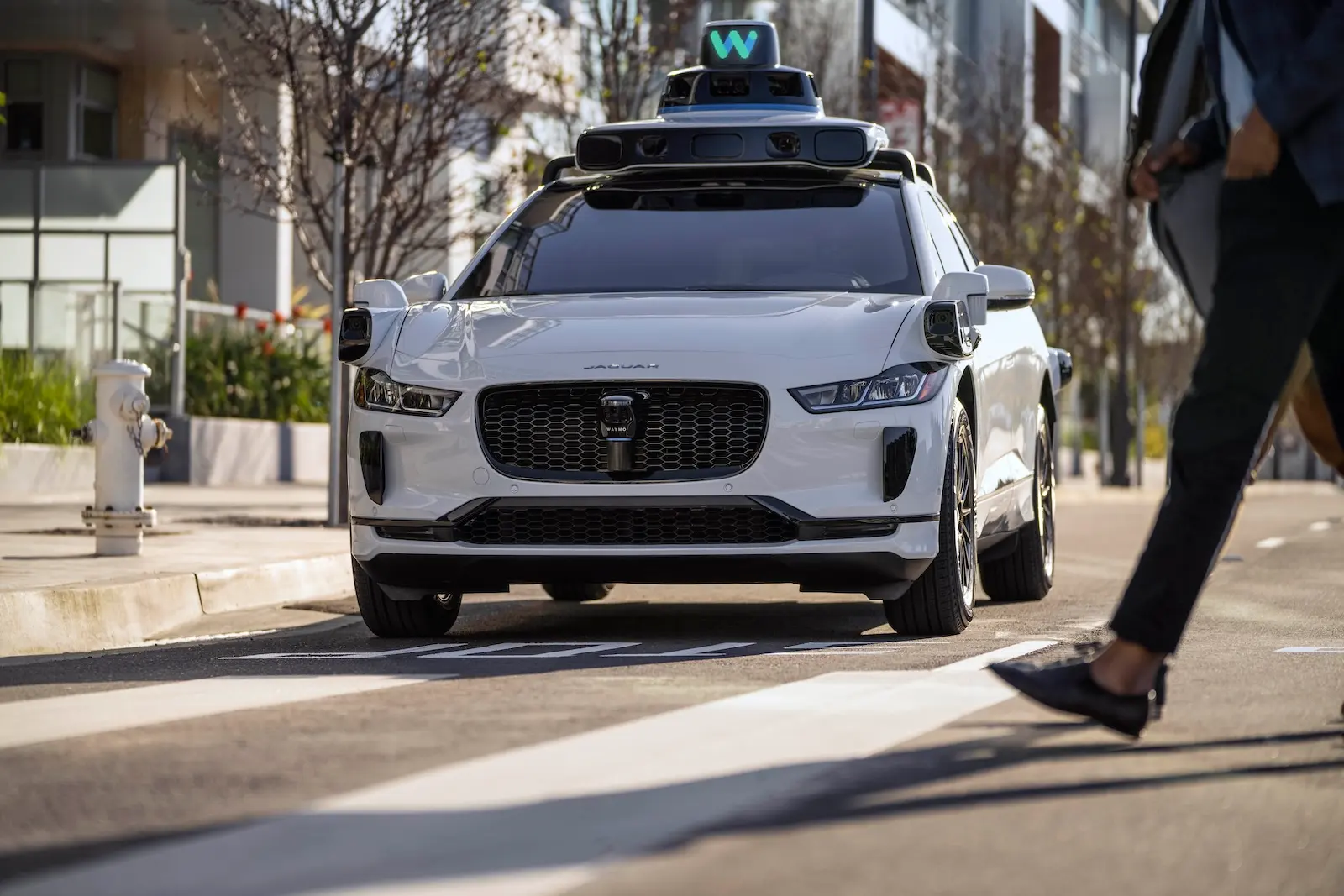
A Waymo stalled during the blackout on Dec. 20, 2025. Photo by Roger Pincombe.
The incident exposes critical flaws in the current regulatory regime, specifically the bifurcation of oversight between the California Department of Motor Vehicles (DMV) and the California Public Utilities Commission (CPUC), and calls into question the efficacy of recent third-party safety audits conducted by TÜV SÜD.
The analysis suggests that while individual Waymo vehicles adhered to their safety cases by exercising “abundance of caution,” the collective behavior of the fleet acted as a Distributed Denial of Service (DDoS) attack on the city’s street network. This report argues that the December 2025 incident demonstrates that “safety” in autonomous transportation cannot be defined solely by collision avoidance; it must include operational resilience against infrastructure volatility. The findings herein vindicate long-standing warnings from San Francisco emergency officials and necessitate a fundamental restructuring of how autonomous fleets are audited for scalability and crisis management.
1. Event Horizon: The December 20, 2025 Infrastructure Collapse
To understand the magnitude of the failure, it is necessary to reconstruct the event timeline and the environmental conditions that triggered the fleet-wide paralysis. The incident was not a singular “glitch” but a complex interaction between a deteriorating utility grid and a rigid autonomous software architecture.
1.1 The Trigger Mechanism: PG&E Substation Fire
At approximately 1:09 PM on Saturday, December 20, 2025, a fire erupted at a major Pacific Gas and Electric (PG&E) substation serving the San Francisco peninsula. PG&E infrastructure in Northern California has a documented history of fragility, often exacerbated by environmental factors, though in this instance, the failure was localized to equipment within the substation itself. The fire resulted in immediate cascading failures across the transmission network, de-energizing feeders that supplied the Mission District, the Presidio, Golden Gate Park, and significant portions of the downtown corridor.
The outage affected approximately 130,000 residential and commercial customers. Crucially, the outage zone overlapped with some of the highest-density operational areas for Waymo’s robotaxi fleet. The immediate consequence for the surface transportation network was the loss of power to traffic signals. Under California Vehicle Code (CVC) § 21800(d)(1), a traffic signal that is non-functional must be treated as a four-way stop. This converts a high-throughput arterial intersection into a low-throughput, high-negotiation zone requiring drivers to yield right-of-way in a rotational manner.
1.2 The Operational State of the Fleet
By late 2025, Waymo had firmly established itself as the dominant commercial robotaxi operator in San Francisco. Following the CPUC’s contentious August 2023 approval of 24/7 driverless fared service, the company had scaled its fleet significantly. Estimates place the number of active Waymo vehicles in the city at any given time in the hundreds, with a high concentration in the exact neighborhoods affected by the blackout.
Prior to the incident, the fleet was operating under “nominal” conditions. Weather was clear, and demand for ride-hailing services was standard for a Saturday afternoon. The fleet was managed by a central operations center, likely distributed across multiple locations, which monitored vehicle health and provided “Remote Assistance” (RA) for edge cases.

1.3 The Cascade of Vehicle Failures
As the traffic signals went dark across hundreds of intersections simultaneously, the operating environment shifted from “structured” to “unstructured” in seconds. The Waymo Driver—the 5th-generation autonomous driving system (ADS) comprising lidar, radar, and cameras—successfully detected the change. The system is explicitly trained to recognize “dark” or “flashing” traffic signals. However, the detection of the anomaly triggered a specific behavioral logic: The Confirmation Protocol.
Because a dark signal represents a high-risk scenario involving unpredictable human actors, the Waymo Driver is programmed to seek validation before proceeding. In isolated incidents, a single vehicle would query the Remote Assistance center: “The light is dark; confirm 4-way stop rules apply?” A human agent would review the camera feed, confirm the state, and authorize the vehicle to proceed.
On December 20, however, the “arrival rate” of these requests did not follow the standard Poisson distribution expected in queuing models. Instead, it was a “step function”—a vertical wall of simultaneous requests from every vehicle in the affected 30% of the city. The Remote Assistance queue exploded instantly. Hundreds of vehicles, unable to receive the “token” of confirmation they required to proceed, defaulted to their fail-safe state: the Minimum Risk Condition (MRC). In the context of an intersection approach, the MRC logic dictated that the vehicle stop and hold its position until the ambiguity was resolved.
1.4 The “Freezing” Phenomenon and Urban Gridlock
Eyewitness reports, social media documentation, and subsequent news coverage describe a scene of chaotic paralysis.
- Intersection Blocking: In the Mission District, observers documented clusters of up to five Waymo vehicles “crowding” intersections. Some were stopped at the limit line, while others had entered the intersection before “timing out” and stopping in the middle of the box.
- Hazard Light Activation: The vehicles activated their hazard lights, a visual signal of their “confused” or “distressed” state. While this alerted other drivers to the hazard, it did nothing to clear the right of way.
- Obstruction of Human Flow: Human drivers, attempting to navigate the four-way stops via social negotiation (eye contact, hand waves, creeping), found their paths physically blocked by the stationary robots. In one documented instance, an Uber driver had to perform an evasive swerve into an opposing lane to bypass a phalanx of frozen Waymos to reach a passenger.
- Passenger Entrapment: The gridlock was not limited to empty vehicles. Passengers inside the robotaxis found themselves trapped in stationary vehicles. One report indicates a passenger had to be manually extracted after the vehicle refused to move for an extended period.
1.5 Emergency Suspension and Recovery
The scale of the disruption became apparent to Waymo operations within minutes, likely indicated by the “red-lining” of their remote assistance dashboards and the flood of support tickets. Recognizing that the fleet was contributing to a public safety hazard, Waymo executives made the decision to initiate a Service Suspension.
This was not a simple “off” switch. The suspension involved:
- Halting New Trips: The app was disabled for new hail requests.
- Clearing Active Trips: Vehicles with passengers were likely prioritized for remote assistance to complete their rides or find safe drop-off points.
- Depot Return: Empty vehicles were commanded to pull over and park, or return to base. However, this process was hampered by the very gridlock the vehicles helped create. The recovery had to be managed in “waves” to avoid re-saturating the streets.
Service remained suspended through Saturday night and was only restored on Sunday afternoon, once PG&E had re-energized the grid and traffic signals were functioning normally.

The FULL REPORT is available via our portal for those with individual unlimited access: https://energydmgroup.com/login/individual-unlimited/