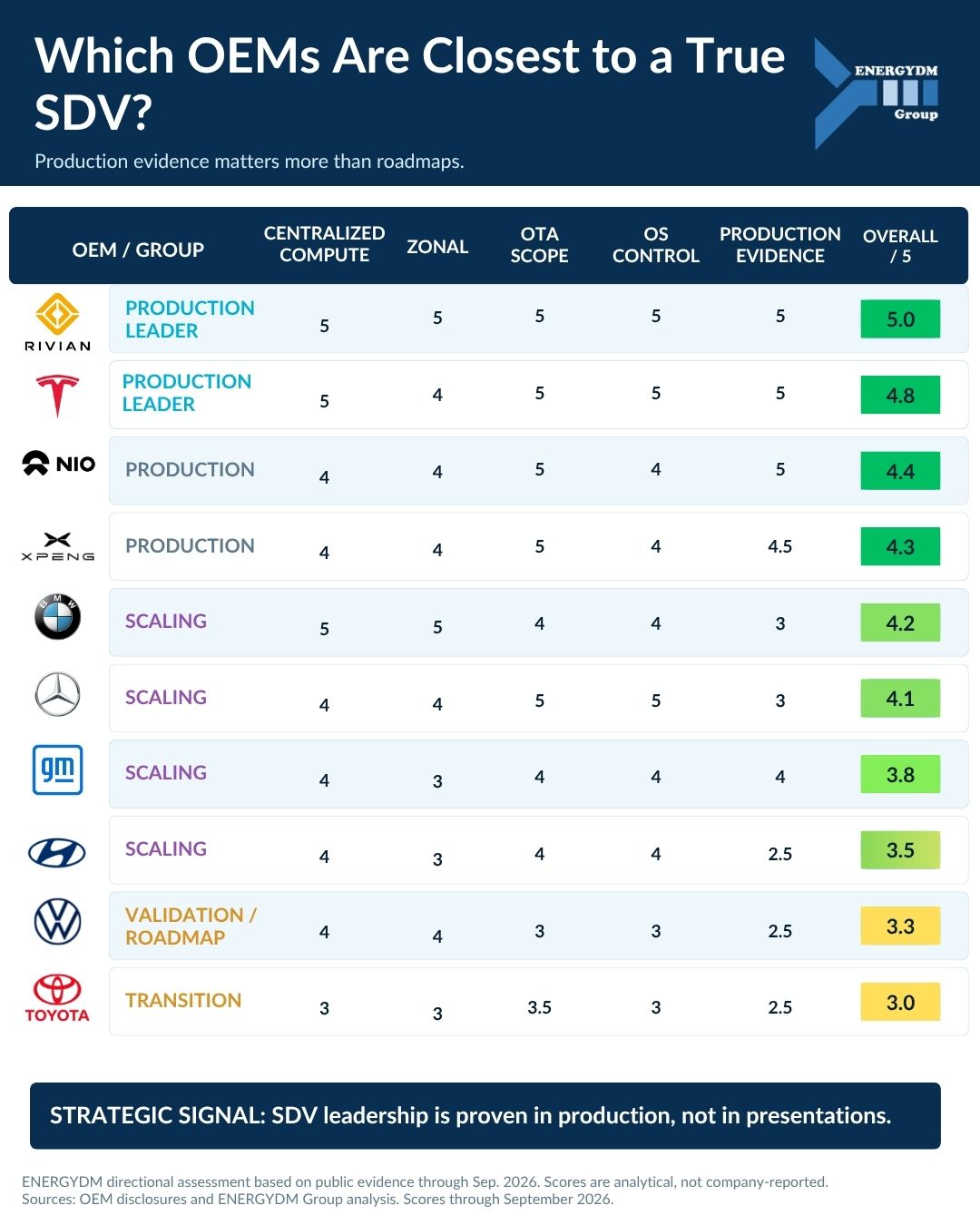
The whole automotive industry is talking about Software-Defined Vehicles. But how close are we to actually delivering a true SDV?
Let’s be clear upfront: a true SDV goes far beyond OTA updates or a large infotainment screen.
There may be different interpretations across the industry of what an SDV really is, but much of this transformation is happening underneath the vehicle: centralized compute, zonal E/E architectures, hardware/software decoupling, cloud connectivity, continuous software deployment, and the ability to add or improve vehicle functions and features throughout the vehicle lifecycle.
Some OEMs are already deploying major pieces of this architecture. Others are still transitioning from highly distributed, domain-based platforms. And this gap matters.
It matters because SDV maturity is becoming much more than a technology discussion.
It will increasingly influence development speed, vehicle cost, scalability, customer experience, and how quickly OEMs can bring new features and technologies to market.
As E/E architectures evolve, fewer ECUs, more centralized computing, and zonal architectures can also change what happens underneath the vehicle. Wiring, communication, power distribution, computing, software integration, and even how vehicles are developed and manufactured are all part of this transition.
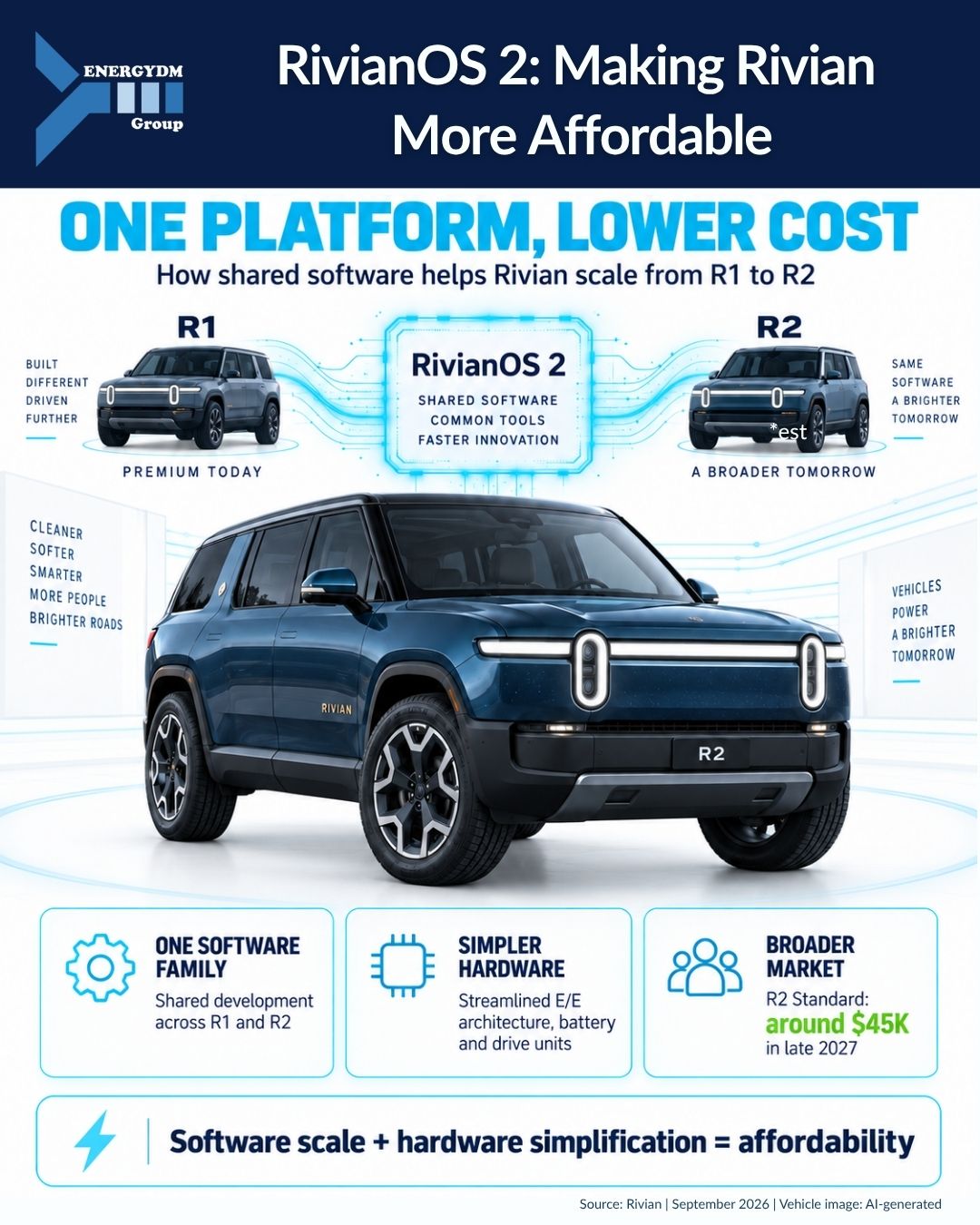
Rivian is one interesting example of how this transition is already happening.
The company has been moving toward a more centralized and zonal E/E architecture, reducing complexity while increasing the importance of software and centralized computing in the vehicle. It is a good example of why the SDV discussion should not be limited to what customers can see on the screen.
The architecture underneath is just as important. And this is also why the transition will not happen at the same speed across the industry. OEMs are starting from different architectures, different software organizations, different supplier structures, and different vehicle portfolios.
The direction is becoming clearer, but execution will be what matters. So, one question the automotive industry should be asking is:
Who can execute this transition faster, and at scale?