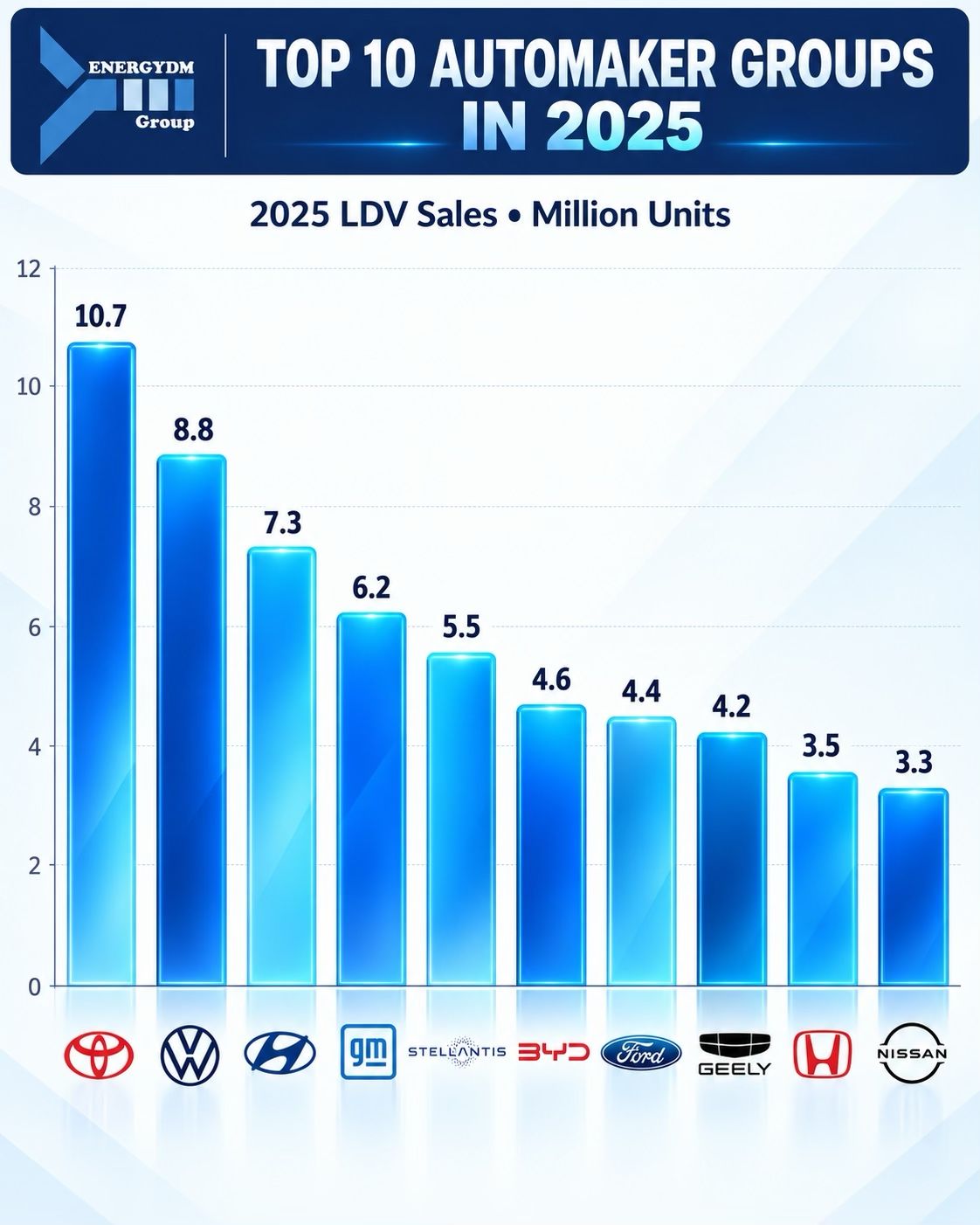
The final 2025 global sales numbers confirm that Toyota Motor Corporation and Volkswagen Group remain well ahead of the competition, while Hyundai Motor Group has strengthened its position in third place.
However, the bigger signal is the rise of BYD and Geely.
These Chinese companies are now firmly established among the world’s largest automaker groups. They are no longer competing only in China or in lower-cost segments, they are expanding internationally and challenging traditional OEMs in Europe and worldwide.
A Different Model for Growth
The success of BYD and Geely is not driven by vehicle volume alone. It also reflects faster development cycles, competitive cost structures, vertical integration, and the ability to introduce new technologies across multiple segments.
Traditional automakers continue to benefit from strong brands, global manufacturing operations, and mature supplier networks. But these advantages become less decisive when product decisions take too long, software development is fragmented, or organizational complexity delays execution.
The competitive gap is no longer measured only by annual sales. It is also measured by how quickly an automaker can understand market changes, launch new products, and improve existing vehicles.
The meaning of scale is changing
Automotive scale has traditionally meant factories, production capacity, purchasing power, and millions of vehicles sold. Those factors still matter, but the industry is adding another dimension: software scale.
Automakers increasingly need platforms that can be reused across brands, models, and vehicle segments. A common software foundation can reduce duplicated development, simplify vehicle architectures, accelerate updates, and create a more consistent customer experience.
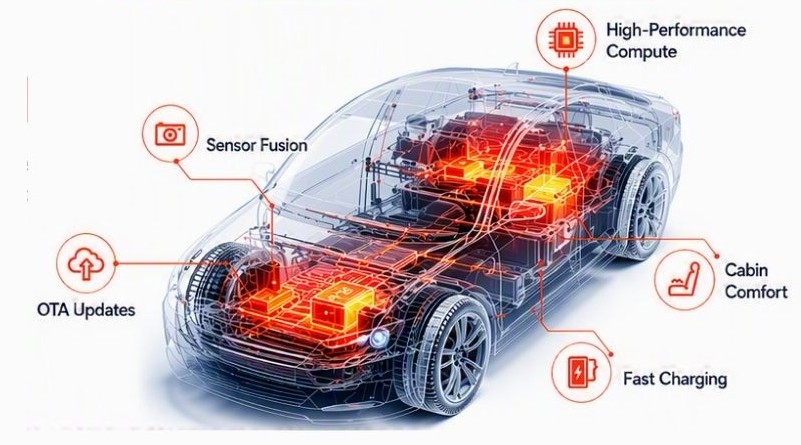
As vehicles become more connected and software-defined, they are no longer finished products when they leave the factory. Customers increasingly expect digital features and improvements throughout the vehicle’s life.
Manufacturing excellence enables an automaker to produce millions of vehicles. Software scalability enables it to improve those vehicles continuously.
What comes next
Traditional OEMs are investing heavily in electrification, centralized computing, new electrical and electronic architectures, and software platforms. The real challenge is turning those investments into faster execution.
Creating a software division is not enough if vehicle programs continue to operate through slow and disconnected processes. Successful transformation requires product strategy, engineering, manufacturing, software, and supplier management to work together.
Toyota remains the global leader, but BYD and Geely represent a different kind of competitive pressure, one built around speed, cost, integration, and global ambition.
The 2025 ranking shows that vehicle volume will remain important. But the winners of the next decade may be defined just as much by how quickly they can learn, adapt, and improve.
Perhaps the future industry leader will not simply be the company that manufactures the most vehicles. It will be the one that can improve them the fastest.
Note: The accompanying graph covers global light-duty vehicle sales, including passenger cars, SUVs, and light commercial vehicles.